
‘The always wind-obeying deep.’
William Shakespeare, The Comedy of Errors, Act I, scene 1
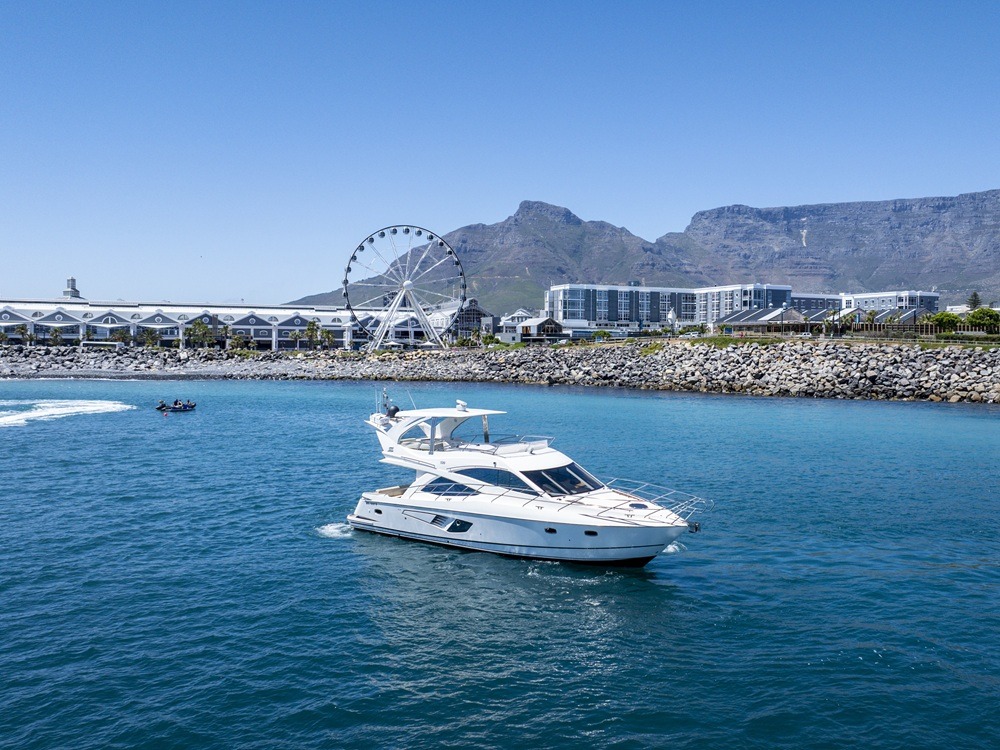
Waterfront Charters have a wide range of vessels in their current fleet, all-purpose built to meet a particular demand. From one of the original denizens of the V&A Waterfront, the sturdy double-decked trawler-based monohull Southern Cross to our newest addition, luxury motor yacht Luna, every boat in our fleet provides a range of amazing charter and scheduled cruise options.
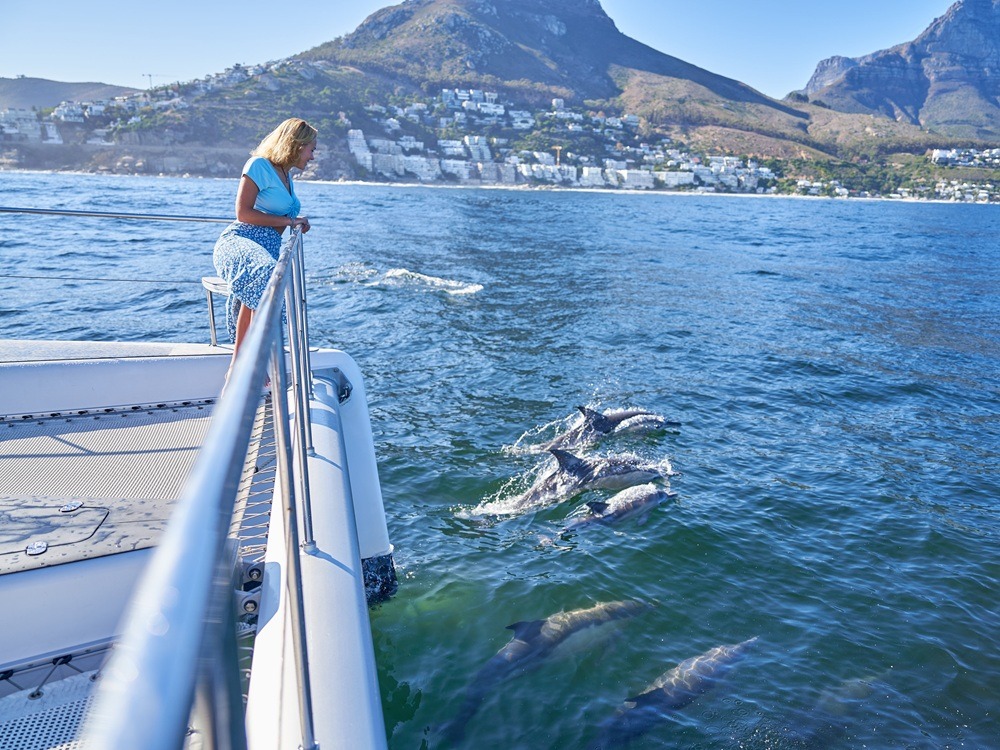
We offer luxurious sail, motor, monohull and catamaran variants as well as our exciting rigid-hulled outboard powered inflatables; the latter cannot be described as luxury – they are the 4×4 craft of the ocean world, capable of thrilling rides but used primarily by us as platforms for our Ocean Safaris. The thrill of viewing South Africa’s land based Big 5 is easily matched by observing Southern Right whales, pods of dolphins, lazing seals, enormous sunfish, sprightly penguins and a host of other sea creatures in their natural environment.
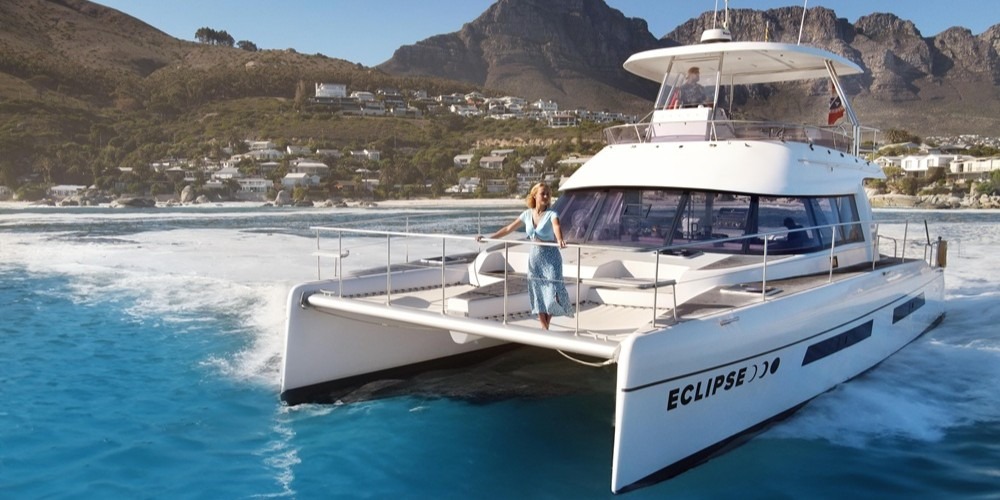
However it’s worth noting that the type of vessel that dominates our fleet is the twin-hulled variant – the catamaran. Sea Princess is our largest double-hulled boat, and can host up to 150 rollicking guests in style; Eclipse, one of our newer additions, is a 42 ft motor powered catamaran that oozes luxury with a maximum capacity of 40 guests. Enigma, another of our more recent motor-powered twinhulled acquisitions, matches Eclipse’s specs and can host larger groups of up to 50 happy passengers. Then there is Serenity One, our beautiful sail powered catamaran; very close to all our hearts here at Waterfront Charters, she can cruise effortlessly – and silently – across the Atlantic under mainsail and jib, chased by the breeze. An experience every landlubber should treat themselves to; but fair warning – it’s addictive. Serenity (perfectly named) can take aboard up to 40 passengers in comfort and offers all the mod-cons of her powered sister ships.

Why catamarans? In truth, they offer exceptional features that make them a good choice for all forms of cruising or sailing activities. The twin hulls are always of identical length (which seems almost self-evident), and have a smaller hydrodynamic resistance than comparable monohulls, requiring less propulsive power from either sails or motors. Less volume than a single hull and a shallower draught – no keel required – make them ideal hulls for virtually any situation from shallow water racing (think Hobie Cats) to docking in tide affected harbours (think ferries). The wide stance of the catamaran also offers – certainly as far as people with minimal sea experience is concerned – a far more stable platform. Heeling as you come about and wave-induced motion is reduced, and sipping champagne as you power across the swells is as easy as sitting on the quayside, but far more fun.
The name catamaran is intriguing, given that its origins actually bear no resemblance to modern day cats. The word ‘catamaran’ is derived from the Tamil word kattumaram, and originally meant ‘logs bound together’. Anywhere from three to seven logs formed the hull or platform of the original kattumarams, but as with the bulk of the English language, the meaning slowly changed over years of usage to refer to ‘twin-hulled’. In truth, the name changed in line with the kattumarams own changes; in Austronesian culture the multi-log hull switched to an outrigger platform– a hull with a supporting floating extension – and then to a version of twinhulled form supporting a platform that enabled better load carrying opportunities. But somehow the name remained, even though there is no extant proof of contact between the Tamil sailors and their Austronesian counterparts.
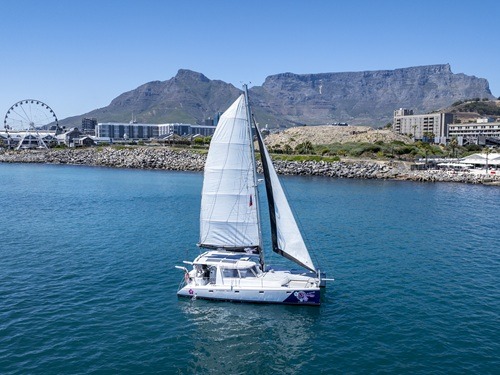

The first European attempt at a twinhulled craft dates back to 1662; a design put forward by polymath Sir William Petty, a musician, doctor, academic and surveyor based in Oxford. He was spot on as far as his thinking went: a vessel that could sail faster in lighter winds, needed less crew and could dock in shallow ports, but alas, his design met with scepticism and was not a success. (He is, however, remembered for his remarkable contributions to economic history and statistical analytical thinking, so perhaps his penchant for messing around in boats would have been the world’s economic loss.) It took another 160 years before the idea was again floated (pun intended), when the delightfully named Englishman Mayflower F. Crisp built a two-hulled merchant ship in Rangoon, Burma. Shortly thereafter an American, Nathaneal Herreshoff, constructed a twinhulled sailing boat for racing on Lake Pontchartrain, patented the idea, and his design was so successful that the huffy New York Yacht Club banned catamarans from 1876 until 1970.
But the multihull idea was now out there, and before long twin hulls started appearing in every form of sailing vessel, followed by power options as these propulsion methods were perfected. Wooden hulls, steel hulls, racing yachts and practical cargo vessels were all tested and put into service, and this history itself makes for fascinating – and long – reading. Suffice it say that the kattumaram is now a staple design in the manufacture of boats, and we at Waterfront Charters will continue to carry the torch for these beautiful vessels. Anyone who has watched racing catamarans flying across the ocean at 50 knots skating on their water-based wings, and anyone who has chilled aboard a luxurious Waterfront Charters catamaran will agree: they have brought an edge to watercraft that will continue whilst the sun rotates above to warm our oceans. Join us to experience the joy for yourselves.

